
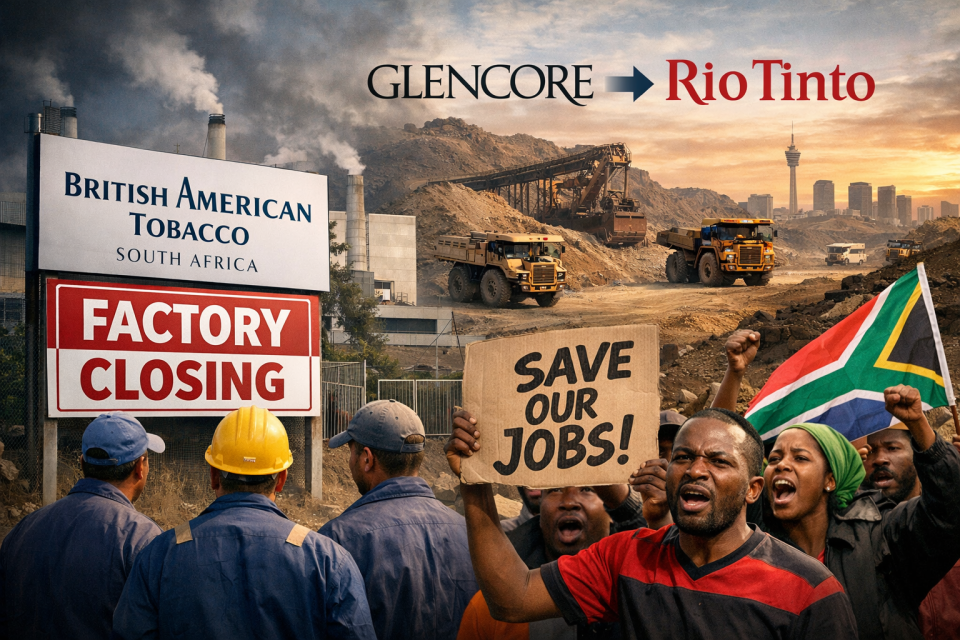
South Africa — The planned closure of British American Tobacco South Africa’s (BATSA) Heidelberg manufacturing plant and growing speculation around a potential Glencore mega-merger have sparked concern about the broader impact of multinational corporate decisions on South Africa’s economy, jobs and regulatory environment.
BATSA has confirmed that it will shut down its only cigarette manufacturing facility in Heidelberg, Gauteng, by the end of 2026. The decision is expected to directly affect more than 200 employees and indirectly impact a wider network of suppliers, transport operators and small businesses that depend on the factory’s operations.
The company has attributed the closure to declining volumes and the rapid growth of the illicit cigarette market, which it says has made local production unsustainable. Economists warn that the shutdown could further weaken local manufacturing capacity while reducing government revenue from excise duties and taxes, at a time when the fiscus is already under pressure.
Beyond job losses, the closure raises concerns about increased reliance on imported tobacco products, exposure to currency volatility, and the potential expansion of illegal trade if enforcement does not improve. Labour unions have called for stronger government intervention to protect workers and intensify action against illicit tobacco networks.
At the same time, uncertainty surrounds South Africa’s mining sector following reports that global commodities giant Glencore is engaged in merger discussions with another international mining major. While details remain preliminary, any large-scale consolidation involving Glencore could have implications for its South African operations, including restructuring, asset sales, or changes to procurement and employment strategies.
Industry analysts note that major mergers often come with efficiency drives that can place jobs at risk, particularly in overlapping administrative and support roles. There are also concerns that consolidation could affect local suppliers and communities that rely on mining operations for economic activity and social investment.
Regulators are expected to closely scrutinise any deal with potential public-interest implications, including employment levels, community commitments, and compliance with South Africa’s competition and mining laws.
Together, the BATSA closure and Glencore merger talks highlight growing challenges facing South Africa as global corporations reassess their strategies in a tough economic and regulatory climate. For government, labour and affected communities, the developments underscore the need for stronger industrial policy, effective law enforcement, and clearer safeguards to protect jobs and local economic development.
