
The easing of lockdown to level 2 on Tuesday has posed new challenges and demand on public toilets facilities. This was outlined by Emma Corder from Industroclean, a manufacturer and supplier of cleaning equipment and products recently.
According to Corder the reopening of shopping malls and restaurants has led to an increase of foot traffic at these public spaces.
“When people visit a restroom at a busy public space, they would expect that the facility is cleaned properly and fully functional. All required health and safety measures must be in place to ensure a safe and hygienic setting in public toilets,”
“Otherwise thousands of people could potentially be exposed to viruses or bacteria, which they could then transport with them as they move around. It should never be assumed that hygiene measures, that were in place pre-Covid-19, will still be sufficient. Tackle this armed with an extensive cleaning plan, and increase the frequency of cleaning based on a proper risk assessment,” Corder said.
Recent surveys and research reports have detailed the many virus and bacteria that could be found inside a public restroom, long before the arrival of the coronavirus. Corder added and said that enhanced monitoring of restroom facilities is needed to ensure that proper hygiene is maintained.
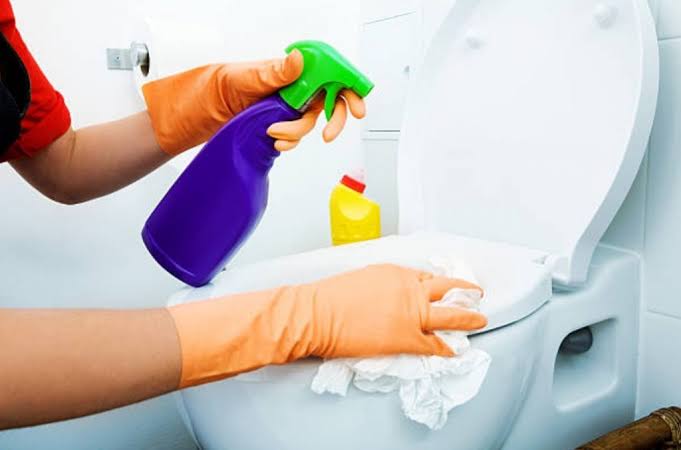
“Use a two-step process, first cleaning surfaces with soap and water and then disinfect to remove viruses and bacteria. Only approved disinfectant, not detergent-based products must be used – these products must comply with the minimum safety requirements and must be registered by the National Regulator for Compulsory Specifications (NRCS)”
Corder further gave the following tips to keep the public toilets safe and clean from spreading Covid-19.
“It is also advised that reusable equipment should be removed and replaced with disposables (e.g. fabric towels, baby-changing mats). COVID-19 survives on hard surfaces present in toilets for at least 72 hours,”
“Areas of particular concern are the frequently touched areas including toilet flush button, toilet seat, cubicle locks and handles, taps, paper towel and soap dispensers and door handles on access or entry points.” Corder said.
