
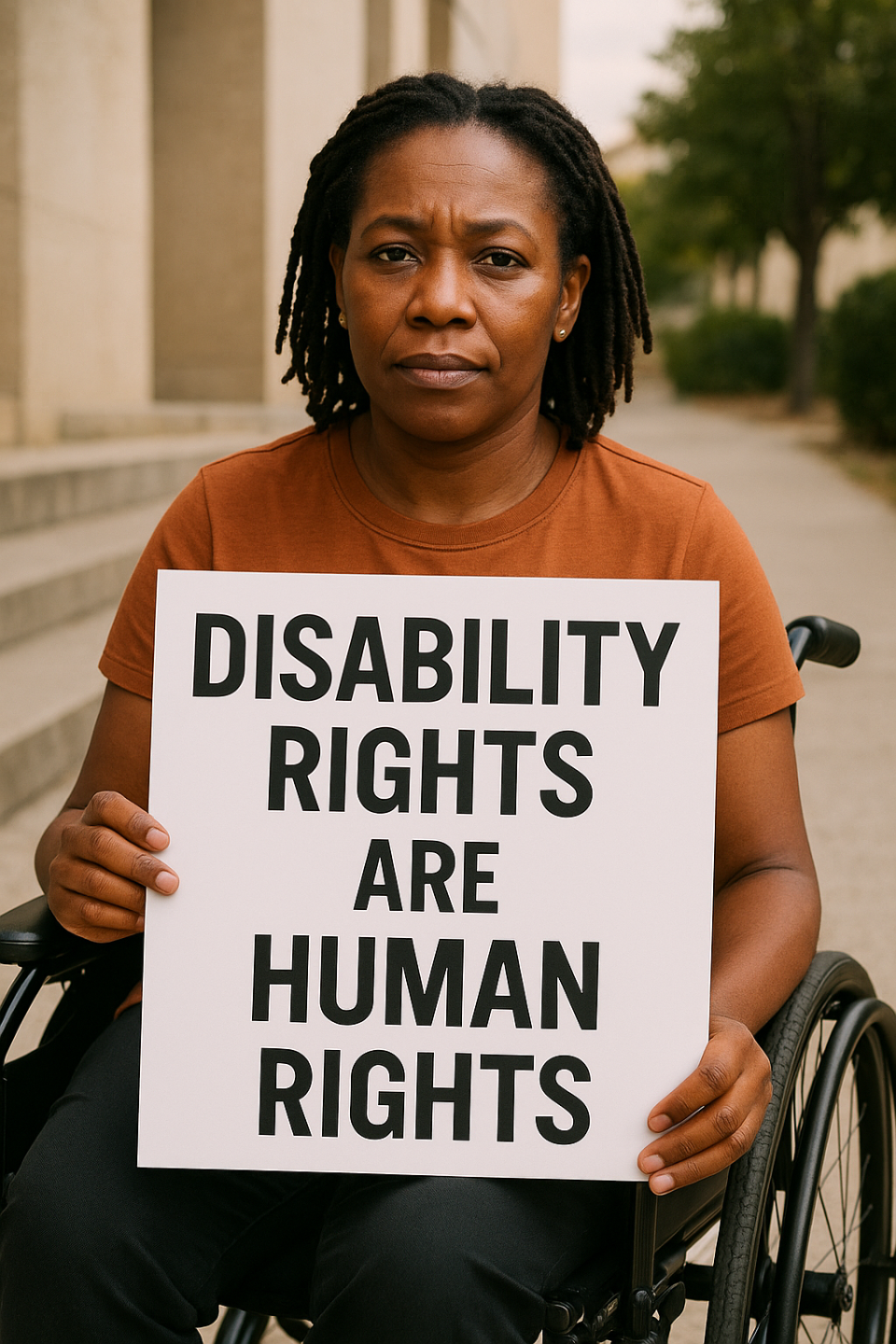
As Disability Rights Awareness Month unfolds across the country, a powerful call for action is rising from right here in Gauteng. The United Africans Transformation (UAT) Persons with Disabilities Front (PDF) is pushing the province — and the nation — to confront a difficult truth: South Africa has strong disability rights laws, yet daily life for many persons with disabilities remains marked by exclusion, inaccessible infrastructure, and slow progress.
While government statements and awareness campaigns are plentiful during November, activists argue that symbolic recognition without structural change leaves people behind. For UAT, this month is not about ceremonies — it’s about challenging the systems that continue to fail citizens with disabilities.
Everyday Barriers Tell the Real Story
From inaccessible public buildings to employers overlooking qualified candidates, persons with disabilities continue to face obstacles that limit their ability to participate fully in society.
UAT says these challenges aren’t about charity or sympathy — they are the result of outdated systems, poor enforcement, and a lack of political urgency.
In Gauteng alone, many residents with disabilities still struggle with:
- Ramped entrances that lead to doors too narrow for wheelchairs.
- Public transport with no space for mobility aids.
- Job interviews where employers dismiss them before the conversation even begins.
- Housing projects that ignore universal access designs.
These may seem like small issues individually, but together they form a barrier that separates thousands of citizens from opportunity and dignity.
Policy Exists — Implementation Doesn’t
South Africa has world-class legislation protecting the rights of persons with disabilities. Yet UAT warns that laws like PEPUDA, the Employment Equity Act, and the White Paper on the Rights of Persons with Disabilities are often applied unevenly.
“The gap between policy and practice is the real disability,” the Front argues.
According to UAT, the problem lies in weak enforcement, limited accountability, and low prioritisation in government budgeting. This results in communities — particularly in townships and informal settlements — experiencing little to no change on the ground.
A Push for Accessible Information and Real Participation
In a rare positive development, the release of the Discussion Paper on the Rights of Persons with Disabilities, Project 148 in both print and Braille has been welcomed as a step toward true inclusivity. Activists want this to become the national standard — not the exception.
UAT insists that all government documents that shape the future of persons with disabilities must be published in formats everyone can access, including Braille and audio.
“Information shapes policy. If people cannot read the documents that govern their lives, how can they participate?” the Front stresses.
Visibility, Not Sympathy
Beyond laws and policies, UAT is challenging South Africans to re-examine how society views persons with disabilities.
Sports, arts, mining, business, and media still largely exclude disability perspectives — or portray them through the lens of sympathy rather than capability.
“The disability community is innovating, leading, building, and contributing. But the country still acts as if ability ends where disability begins,” says UAT.
Walking for Purpose in Gauteng
To turn awareness into action, UAT will host its “Walk for a Purpose” event this month. The Fun Walk aims to bring communities, families, allies, and persons with disabilities together — not in protest, but in solidarity.
It’s a reminder that progress is a collective journey, and inclusion is everyone’s responsibility.
A Message That Gauteng Cannot Ignore
UAT’s message this year is sharper and more direct than ever:
Disability is not inability. Equality is not charity. Inclusion is a right — and it is non-negotiable.
For Gauteng, Africa’s economic powerhouse, this moment presents an opportunity to lead the country by example — by building a province where accessibility, dignity, and fairness are not promises, but lived realities.
