
By Themba Khumalo
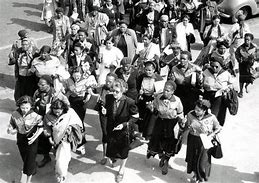
As we celebrate Women’s Month, the role of women to develop South Africa’s economy cannot be over-estimated.
While our forebears survived without electricity and many other modern-day aspects of life, water formed an integral part of their livelihoods. Spells of droughts brought about misery and social instability as they deprived the beleaguered communities a crucial source of survival – water.
According to a report by the United Nations, without safe drinking water, adequate sanitation and hygiene facilities at home and in places of work and education, it is disproportionately harder for women and girls to lead safe, productive, healthy lives.
Across low-income countries – says the report – women and girls have a primary responsibility for management of household water supply, sanitation and health. Often, fulfilling these roles precludes any other occupation or participation in education, and their marginalization is compounded by the indignity and insecurity of having nowhere private to go to the toilet. Addressing the needs of females in relation to water, sanitation and hygiene is a key driver in achieving gender equity and locking the potential of half of global society. In many countries, the presence or absence of a safe and sufficient water supply and improved sanitation facilities has a disproportionate effect on the lives of women and girls for three main reasons. First, women and girls usually bear the responsibility for collecting water, which is often very time-consuming and arduous. Second, women and girls are more vulnerable to abuse and attack while walking to and using a toilet or open defecation site. And third, women have specific hygiene needs during menstruation, pregnancy and child rearing.
Yet, in some rural areas of South Africa we still have women and girls who have to walk long distances to fetch water from reptile-infested rivers for basic domestic use. Stories of young girls who are killed by crocodiles while fetching water from these rivers abound.
The challenge of these girls brings to the fore the importance of water. The slogan that says ‘water is life’ is not an empty rhetoric. As a water-scarce country in a dry continent, indeed every drop counts. As we approach the summer which shower us with rain water, we shouldn’t lose sight of the crucial role that is played by water. It is about time that we disabused ourselves of the notion that water is delivered free from the sky and therefore there’s hardly a need to pay for it.
The picture of Capetonians queuing for water with containers at the height of a severe drought last year must be imbedded in our minds. Like any other South African, they never fathomed the hardships of struggling to get a drop of clean water for drinking. The reality of the consequences of Climate Change, which has come with extremely dry conditions or perilous floods is upon us. It’s either we adapt or die.
