
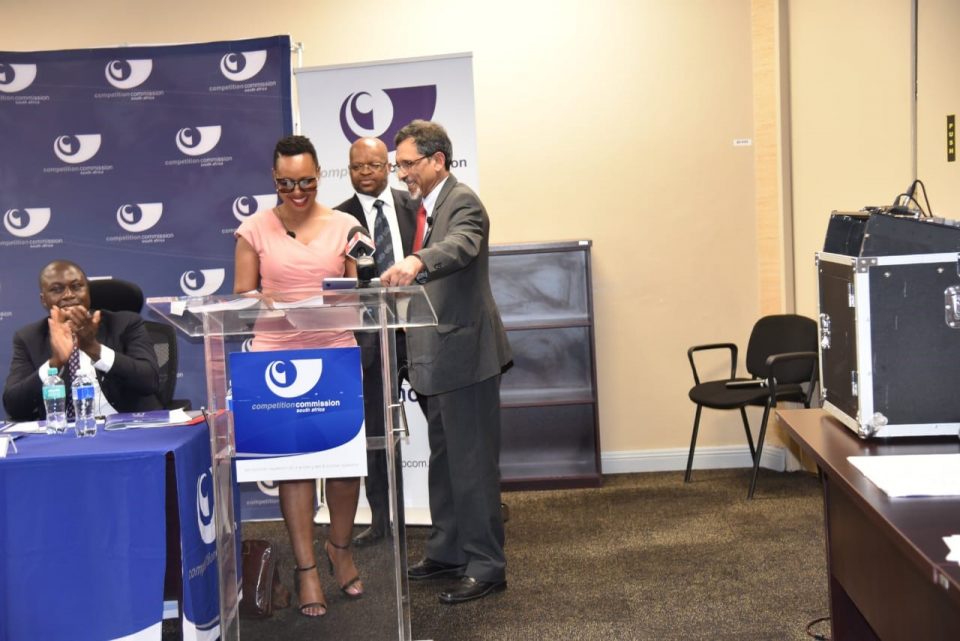
South Africa has the highest price of mobile data which reportedly exceeds that of many countries in the world. Profits amassed by mobile network operators (MNOs) in South Africa exceed that of MNOs in similar markets, including those markets where South African MNOs are operating. These were among the key findings of the Competition Commission in the final report on the Data Services Market Inquiry. The release of the report on data prices in South Africa was warmly welcomed by South African Ministers Ebrahim Patel and Stella Ndabeni-Abrahams, at an event at the offices of the Competition Commission in Pretoria.
The Report proposes a reduction in data-prices charged by the telecoms companies, by a third to half of the current rates. Prepaid customers should be entitled to a minimum package of free data daily. Roaming prices should be reduced and MVNO pricing should be below the retail prices charged. Content sought by educational institutions should be accessed free of charge in order to provide students and citizens with easy access. In order for customers to see the real difference between the pricing of different telecoms companies transparency regarding the pricing should be provided.
“They found that there is indeed a competition problem in the market for data. The report notes that data prices are higher than they should be, and higher than in many other markets elsewhere in the world. They found that profitability levels are very high, reflecting anti-competitive outcomes and potentially the subject of an excessive pricing investigation. They drew attention to the structure and practices in the market that results in discrimination against lower paid consumers and they found that the roaming markets are not working or are not working as they should,” said Minister Pateel.
“Data costs are critical to the performance, not just of the digital economy, but to the entire economy. If you think of the 20th century as a century that was reshaped by oil and steel, the 21st century is being reshaped by data. The academic literature, and studies by the World Bank have all indicated a strong relationship between data prices and access on one hand and economic performance on the other hand. If we want to grow the economy then we need to have the lowest possible data prices,” Minister Patel said.
The Competition Commission will seek to engage the industry on bringing down data prices over the next two months. The Commission has indicated that it would seek other remedies under the Competition Act in the event that such engagement does not yield lower prices for consumers.
Minister Patel handed over the report to his counterpart, Communications and Digital Technologies Minister, MsStella Ndabeni-Abrahams. The two ministers concur that there is a competition problem in the market, and this warrants a policy and regulatory intervention. Minister Ndabeni-Abrahams noted the report, reiterating the importance of lowering the cost of data in order to ensure that lower income communities are not further marginalised by high mobile and data costs.
“Data access and affordability are integral to ensure the full participation of our communities in the digital economy. As a department, we have prioritised spectrum licensing as part of the interventions to reduce the cost of data. We therefore look forward to further engaging with the report and exploring its recommendations”, said Minister Ndabeni-Abrahams
