
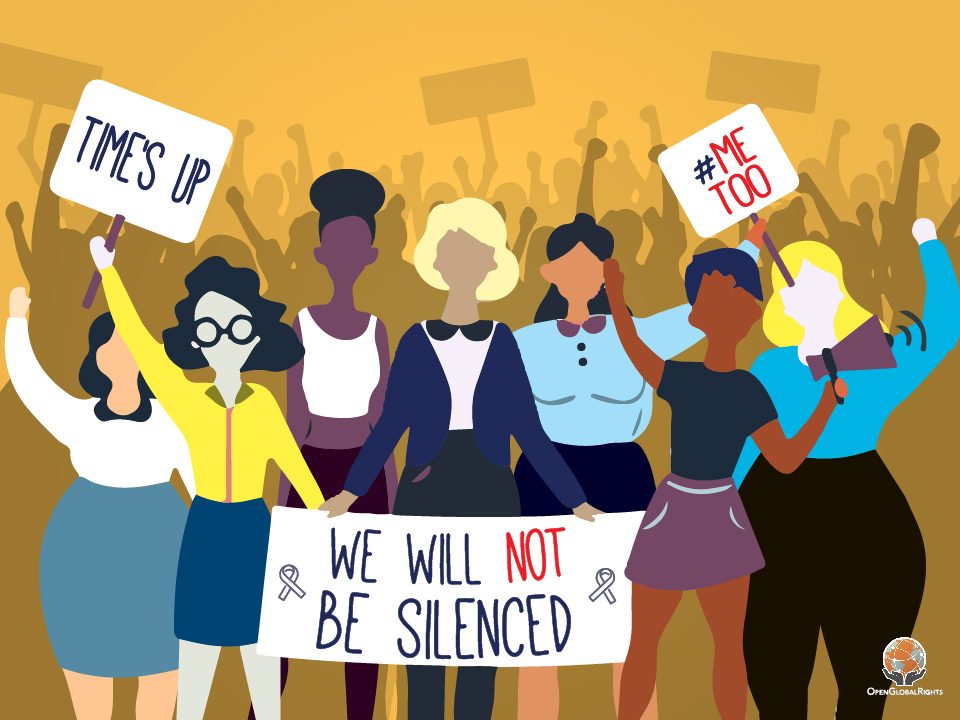
Violence against women and children is an unacceptable violation of basic human rights. Every day, three women die at the hands of their intimate partners in South Africa. How many more lives of women and girls must be must be lost under these perpetrators for all of us to take a stand?
The recent matter of Bongekile Simelane, popularly known as Babes Wodumo is just many of the cases. Unfortunately, for many women who are not in the spotlight their cases go unreported for various reasons. Understandably so, when her video went viral, it had tongues wagging about the scourge of gender based violence in the country. She must be applauded for her bravery and exposing the monster in action, Mandla “Mampintsa Maphumulo.
It is for this reason that as Gauteng City region, we urge women influencers and women in different spheres of work to end the silence against gender based violence. Many victims of Gender Based Violence (GBV) are unlikely to go to police stations to report their cases due to the patriarchal attitudes of some police officials. I personally would like to applaud Babes Wodumo for coming out and speak against abuse. The observation is that the primary targets of Gender Based Violence as victims are women and adolescent girls, but not only are they at high risk of abuse, they also suffer exacerbated consequences as compared to what men endure. As a result of gender discrimination and their lower socio-economic status, women have fewer options and less resources at their disposal to avoid or escape abusive situations and to seek justice.
We owe it to the likes of Karabo Mokoena, Viwe Dalingozi, the seven members of the Khoza family from Vlakfontein who were brutally murdered, Ndibi siblings from Tshepisong to name a few to create a safe and secure society for victims as well as a society where women are not blamed or told to persevere when they reach out for help. We also owe it to t a society where not just women, but men play a role in fighting gender based violence and most of all, a society where our criminal justice system prioritizes the protection of vulnerable groups.
The society has until recently worked tirelessly to denounce gender based violence. Marches by women under the umbrella of #TheTotalShutdown and the occupation of the Union Buildings on 1 August 2018 which demanded a national summit against gender-based violence. The motivation was driven by the excessive scale of gender based violence, including the killing and rape of women and children and the ineffective court processes over the past years.
The summit was therefore considered a historical turning point as it provided the opportunity for government, civil society and social movements to work constructively towards eradicating gender based violence. The extent of gender-based violence and femicide in South Africa has reached crisis point.
Despite concerted efforts by government, GBV remains a major human rights violation in South Africa. South Africa has made strides in uplifting women in the country. However, despite this progress, GBV remains unacceptably high. Cultural, religious, social and economic factors play a role in driving GBV. Population studies show that more than ¼ of men reported rape (27%) and data from women show between 25 and 40% experienced physical or sexual violence. Gender-based violence, femicide and hate crimes is an insult to our common humanity as South Africans. It is also a violation of the Constitution of South Africa and obstructs sustainable human development. The realization of a prosperous and vibrant democracy is deeply compromised by the effective disabling of more than half the country’s population.
Murders of women and children made up 19.3% of the total murder count in South Africa in 2017/18. In 2017/2018, The rape rate decreased from 71.3 per 100,000 people to 70.5 which makes only 0.8 difference. This is a disgrace to the 20 000 Women who marched to the Union Buildings in protest of pass laws on the 9th of August 1956. Although women can also be violent and abuse exist in some same sex relationships, the vast majority of partner abuse is perpetrated by men against their female partners.
Gauteng Government will continue to engage the society on this burning issue. On the 17th of this month my department is convening a Gender Based Violence Dialogue comprising of young professional women, young women from the entertainment industry and those from various institutions of higher learning to encourage them to speak out against abuse and to strengthen the social movement against gender based violence. The dialogue will also be attended by some prominent males within the entertainment industry. It is of importance that women from all walks of life irrespective of their social standing stand up and report any form of abuse by their loved ones without fear or favour. I am delighted that Babes Wodumo has pressed assault charges against Mampintsha and that he will finally get his day in court.
Subsequent to that, we will also convene a men’s conference aimed at urging men to be protectors of women and children. It is imperative that men must also play a key role in standing up against violence, as husbands and partners, brothers and sons. No one can tackle it alone, all must reach out for shared dignity, mutual respect and a renewed commitment to end violence against women and children.
I am delighted that our Government does not take gender based violence lightly. On the 05th of March 2019, the MEC for Gauteng Treasury, Barbara Greecy announced an allocation of R69.3 million to fight crimes against women and children. This is a very serious commitment by government to tackle gender based violence cases. Gender Based Violence affects all levels of society and women, girls, children gender nonconforming individuals, and people with disabilities are primarily the victims. It also impacts profoundly on the lives and well-being of survivors, their families, the wider community and society. Women are not a homogenous group and are subject to intersectional vulnerabilities exacerbating the inequalities, discrimination and oppression. Our constitution sets the overarching framework for effectively responding to and preventing gender-based violence and protecting human rights. My department has put in place policies, programmes and interventions to address respective forms of gender-based violence and the needs of vulnerable groups such as women, children and the LGBTI+Q. Despite the above, implementation of these laws and policies is not effective as survivors continue to experience high levels of secondary victimization and the criminal justice system response is inadequate.
Survivors’ psychosocial and related needs are not being met and often civil society organizations are bearing the brunt of providing care and response. Prevention is a key element in turning the tide on gender-based violence, but has not received the necessary attention. We have noticed images of women’s objectification, men’s entitlement and normative gender roles contributes to fueling the levels of gender-based violence.
It is incumbent upon us as South Africans to respond to gender-based violence inclusive of the needs of people with disabilities and gender non-conforming people. A targeted social behaviour change programme to address patriarchal values and norms and structural drivers of gender-based violence must be developed and implemented. This should be targeted at all sectors, including individuals, families, communities, civil servants, religious and traditional leaders, the private sector, the media community and others that are strategically placed to influence attitudes, behaviors and practices, supported by an effective, resourced communication strategy.
It is critical to have the involvement of many sectors of South African society, across different experiences and identities, which have contributed to challenging Gender Based Violence (GBV) over the years, including organizations broadly and those working specifically with children, the older persons, persons with disabilities, migrants, LGBTQI, academia, labour, business, media, development agencies, government and other relevant structures. We must work collaboratively towards the eradication of gender-based violence in the communities in which we live.
No one has the right to abuse women in our society and even with the slightest provocation. The time has come for women to break the silence against any form of abuse so that they can receive assistance. We cannot allow women to be subjected to the most degrading and inhumane behavior perpetrated by men. Violence perpetrated against women is an offence against the founding values of our democratic government and its constitution.
As Gauteng City Region, we will continue to walk the path with all victims, survivors of gender based violence and empower them with prevention strategies. Through our departmental victim empowerment centre, Ikhaya Lethemba, which continues to be a sanctuary for victims of abuse, we will make available holistic services to any victim irrespective of their social standing such as psycho-social services and medico-legal services amongst others. Lastly, I urge women from all sectors of society to join Community Safety Structures such as Women as Safety Promoters and Youth Safety Desks at their respective police stations. This will enable them to share best practices on gender based violence prevention strategies and break the cycle of dependence.
